From Curiosity to Capability: The Rite Tutor Journey
How We Transform Kids Into Logical Thinkers Through Personalized Online Mentorship
The Problem With Traditional Coding Classes
Most coding programs follow a depressingly predictable pattern: Gather 15-20 children into a virtual classroom, assign everyone the same age-appropriate project, provide minimal individual attention, and hope struggling students somehow keep pace while gifted learners zone out from boredom.
The result? Children learn to copy code they don't understand, memorize syntax without grasping underlying logic, and develop the dangerous belief that programming is either impossibly confusing or trivially simple—depending on whether they fall behind or race ahead of the group average.
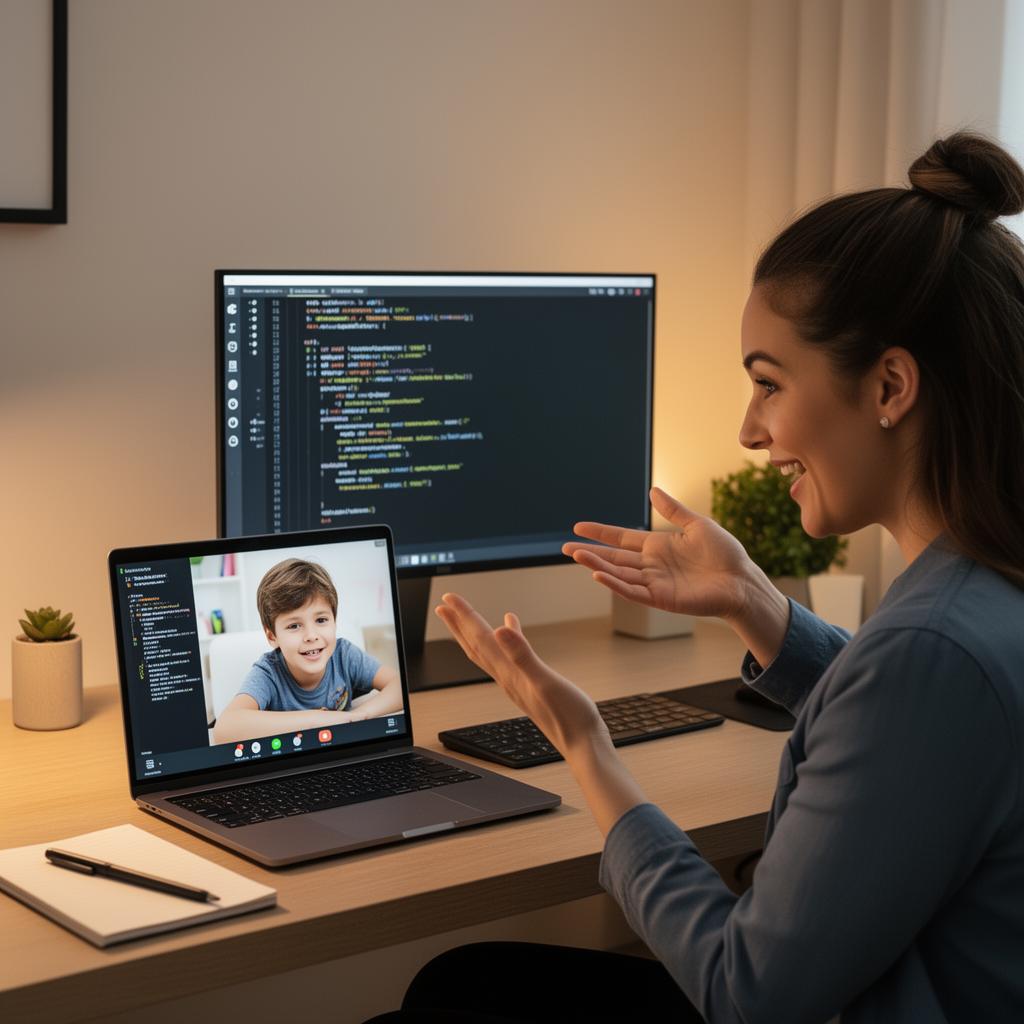
Rite Tutor operates from a fundamentally different model. We reject the factory approach entirely. Every student receives 100% of their mentor's attention, every single session. No competing for teacher time. No waiting for slower peers to catch up or feeling pressured to move faster than comprehension allows. Just pure, focused mentorship calibrated to your child's exact skill level and learning pace.
The Logic-First Assessment
We don't start with "What grade are you in?" or "Have you coded before?" Those questions assume age correlates with ability and that prior exposure equals mastery. Both assumptions are demonstrably false.
Instead, our initial assessment focuses on how your child thinks. Through carefully designed logic puzzles, pattern recognition challenges, and problem decomposition exercises, we identify their current reasoning capabilities. A fourth-grader might demonstrate tenth-grade analytical thinking. A high schooler might need foundational work in algorithmic approaches.
What Makes Our Assessment Different
This assessment is friendly, low-pressure, and actually enjoyable. We're not testing your child—we're understanding them. How do they approach unfamiliar problems? Do they jump straight to solutions or plan systematically? Can they explain their thinking process?
For families anywhere in the world, this means no standardized placement tests that reduce your unique child to a generic skill bracket. The assessment happens online, on your schedule, with immediate feedback and personalized pathway recommendations.
Perfect Mentor Matching
Technical expertise alone doesn't create effective teaching. A mentor might be a brilliant developer but struggle to explain concepts to children. Another might excel at working with introverted analytical thinkers but clash with enthusiastic extroverts.
That's why Rite Tutor invests significant effort in mentor-student matching. We consider:
- Learning style (visual vs. verbal, big-picture vs. detail-oriented)
- Personality compatibility
- Communication preferences
- Specific educational objectives
- Scheduling needs across time zones
The goal is creating a mentorship relationship where your child feels safe asking questions, comfortable admitting confusion, and excited to tackle challenging material.
The Three-Pillar Learning Framework
Pillar 1: Logic (The Why)
Before writing a single line of code, students must understand how to think algorithmically. We use visual, interactive platforms to build proportional reasoning, pattern recognition, and systematic problem decomposition. These aren't abstract exercises—they're the foundational thinking skills that make advanced programming intuitive rather than mystifying. Logic comes first. Always.
Pillar 2: Syntax (The How)
Rite Tutor teaches integrated coding from day one. Students learn HTML structure, CSS styling, and JavaScript functionality simultaneously through project-based builds. They don't memorize disconnected syntax—they orchestrate multiple technologies to create real web applications. This mirrors how professional developers actually work.
Pillar 3: Product (The What)
Generic coding exercises teach syntax. Real projects teach thinking. Every Rite Tutor student builds a portfolio of functional applications—not tutorials they copied, but original creations that solve genuine problems. Every project gets published to professional version control, creating a documented history of growth.
The Junior CTO Portfolio Development
Traditional coding classes produce students who've completed courses. Rite Tutor produces students who've built things. There's a massive difference. As students progress, they develop what we call a "Junior CTO Portfolio"—a collection of increasingly sophisticated projects.
What's Included
When college admissions officers review this portfolio alongside generic transcripts from traditional coding classes, the difference is stark. One demonstrates actual capability. The other proves attendance.
Parent Visibility: The Transparency You Deserve
After every single session, parents receive detailed updates. Not vague summaries—specific breakdowns of what your child learned, where they struggled, breakthroughs they achieved, and what comes next.
Additionally, you have direct access to every platform we use. Want to review your child's version control history? It's available. Curious about analytics showing proficiency levels? Log in anytime. Interested in which courses they've completed? Check the dashboard.
This radical transparency serves multiple purposes: Ensures accountability, helps parents support learning at home, and builds trust through demonstrated results rather than marketing promises.
For families globally, this level of ongoing communication is revolutionary. You're never wondering whether your investment is working—you know, session by session.
The Long-Term Pathway: From Logic Explorer to Tech Professional
Rite Tutor isn't a short-term skill acquisition program—it's a multi-year educational partnership. Our structured learning pathways accommodate students from age six through fifteen, adapting complexity and pacing to match developmental progression.
Younger Students (Ages 6-8)
Focus on play-with-purpose logic development, building pattern recognition and sequential thinking through engaging visual exercises.
Mid-Range Students (Ages 9-11)
Transition from block-based coding concepts to text-based languages, developing debugging resilience and project planning capabilities.
Advanced Students (Ages 12-15)
Pursue professional-level certifications, college credits, and sophisticated full-stack development.
Book Your Free Strategy Call Today
The first step is conversation, not commitment. No pressure. No sales scripts. Just honest dialogue about transforming your child's potential into excellence.