
Most coding programs start with Python or JavaScript syntax: "Here's how you define a variable. Here's how you write a loop."
Rite Tutor starts differently: "How do you break complex problems into steps? How do you recognize patterns? How do you decompose challenges?"
The Foundation Analogy
Imagine building a house by starting with the wallpaper. You might create a beautiful surface, but without foundation, framing, and structural integrity, the house collapses under stress. That's what happens when coding education starts with syntax.
Students who memorize Python commands without understanding algorithmic thinking can reproduce tutorial projects but struggle with unfamiliar challenges. They know HOW to write code but not WHY specific approaches work or WHEN to apply different strategies.
Logic Is Permanent. Languages Change.
Here's the practical reality: programming languages evolve constantly. Python might be dominant today, but a decade from now, entirely new languages may lead the industry. Students who learned only Python syntax will need to start over. Students who learned logical thinking will adapt effortlessly because the underlying problem-solving skills transfer across any language.
How We Implement Logic-First Education
Before writing a single line of code, our students work through visual logic platforms building proportional reasoning, pattern recognition, and systematic problem decomposition. These aren't abstract exercises—they're the exact thinking skills that make programming intuitive rather than mystifying.
For younger students, this might mean spending weeks on logic puzzles and mathematical thinking before touching code. For advanced learners, we integrate logical frameworks directly into programming projects. Either way, logic comes first. Always.
The Results Speak
Students who begin with logic foundations consistently outperform those who started with syntax—even when the syntax-first students had months of head start. Why? Because understanding WHY something works makes learning HOW dramatically faster.
Related Articles

Why Your Gifted Child is Bored in Coding Class (And What To Do About It)
The heartbreaking pattern repeats worldwide: a brilliant nine-year-old masters programming concepts in two weeks, then sits through ten more weeks of review. Here's why age-based curricula systematically fail gifted learners.
Read MoreThe Complete Coding Roadmap for Kids Ages 6 to 15
What should a 7-year-old learn? An 11-year-old? A 14-year-old? A skill-based roadmap from first logic puzzles to university-level coursework.
Read More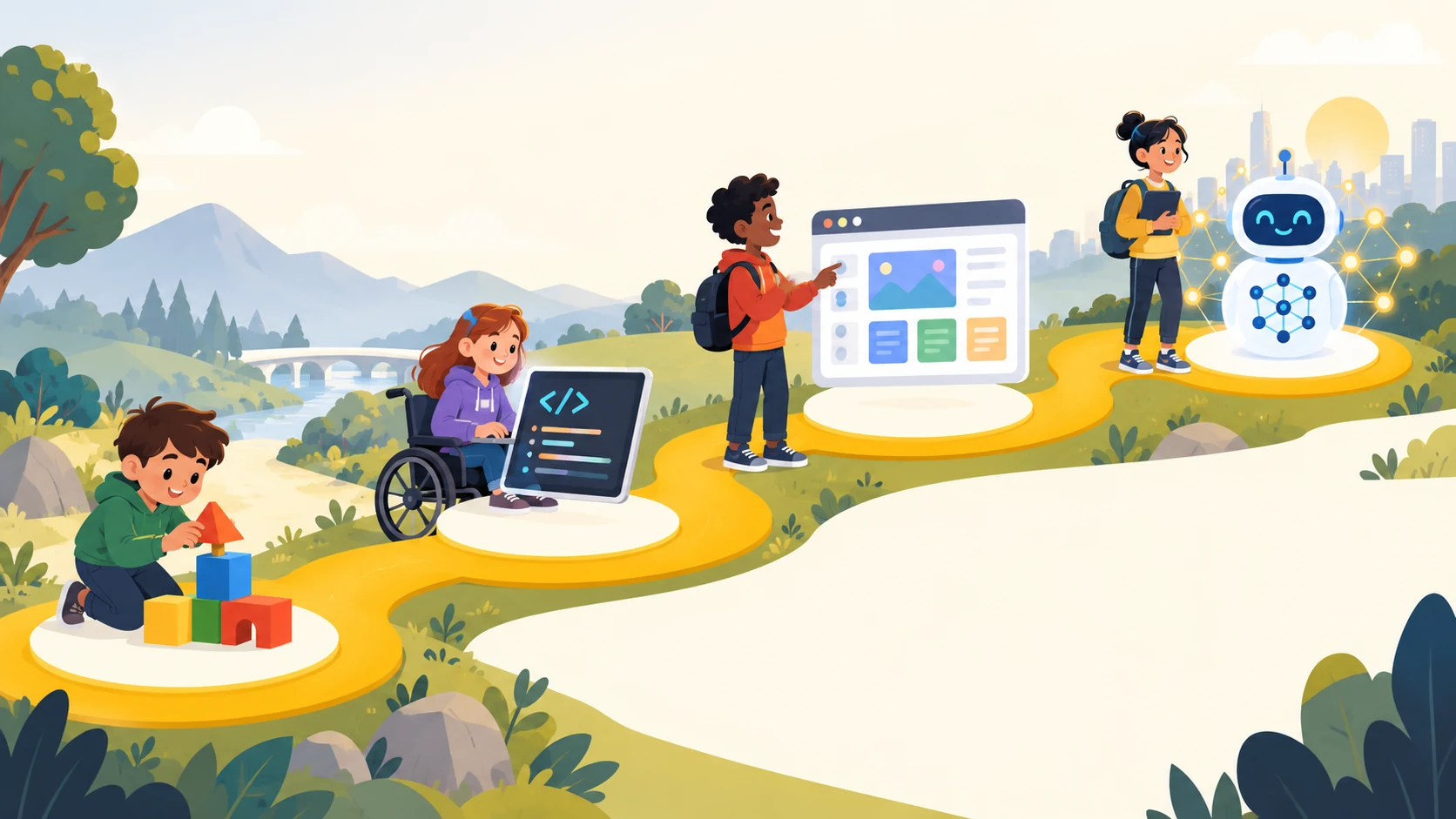
Coding Roadmap for Kids Ages 6–15: Choose by Skill, Not Just Age
Find your child’s next coding step by readiness, from visual blocks and Python to web development, full-stack projects, and AI.
Read MoreReady to Start Your Child's Journey?
Book a free 30-minute strategy call to discuss your child's potential.